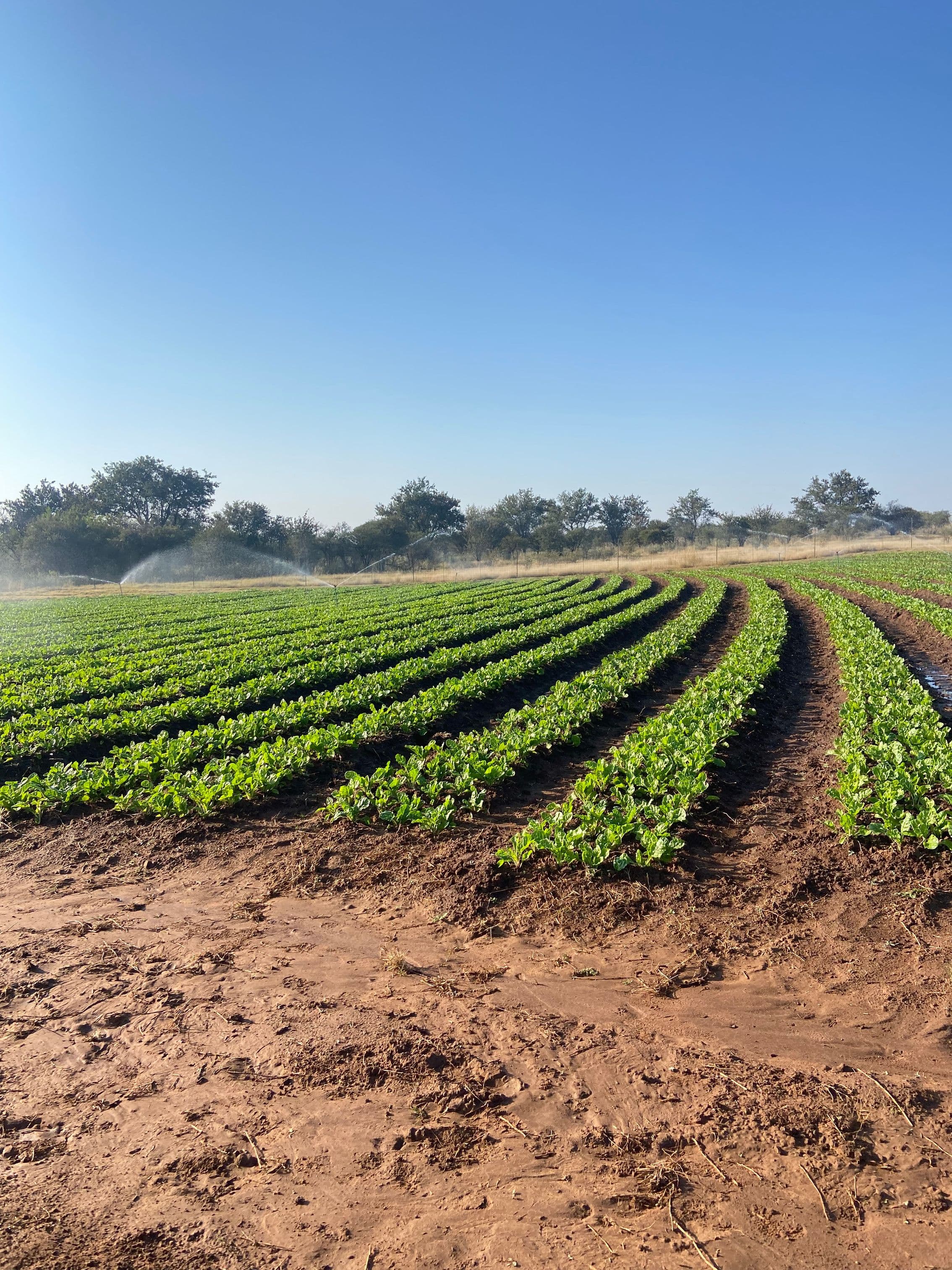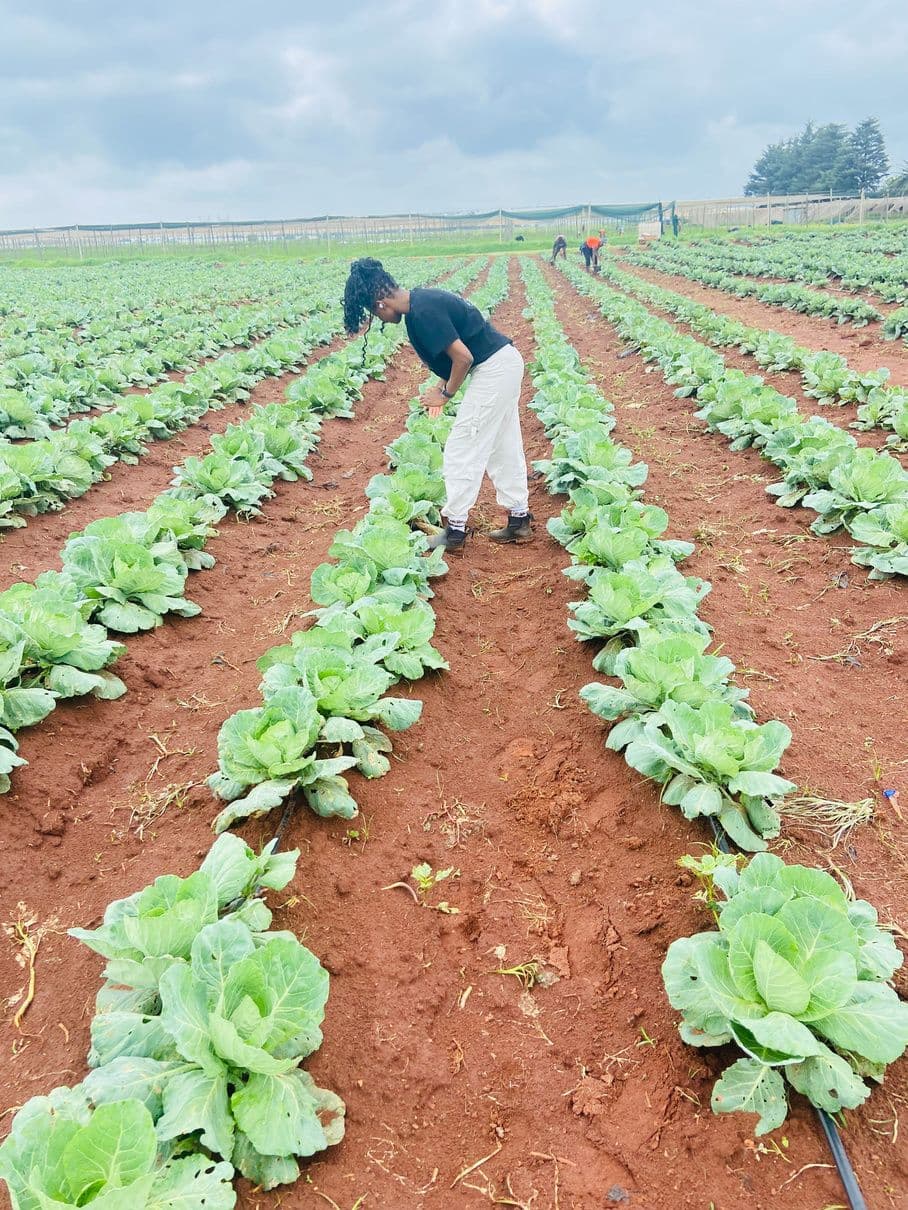
Proper crop rotation is one of the most powerful tools available to any farmer. Here's how we apply it across our operations — and the results we've seen.
The Principle Is Ancient. The Results Are Modern.
Crop rotation — the practice of growing different crops on the same land in sequential seasons — has been used for thousands of years. Roman farmers understood it. Medieval European agriculturalists formalised it. Today, soil science has given us the precise mechanisms that explain what experienced farmers observed empirically: rotating crops improves soil health, reduces disease and pest pressure, and increases long-term productivity.
Yet many smallholder and even some commercial operations in South Africa still grow the same crop on the same soil season after season. The short-term reason is usually commercial simplicity — an established buyer relationship for one crop, familiarity with its management, or the perceived cost of changing infrastructure. The long-term cost is soil degradation, increasing input requirements, and eventually, declining yields.
How Rotation Works: The Science
Different crops have different root architectures, nutrient demands, and interactions with soil microorganisms. Growing the same crop repeatedly creates imbalances: certain nutrients are progressively depleted, specific pathogens and pests build up in the soil, and the microbial diversity that underpins healthy soil function declines.
Rotation breaks these cycles. A deep-rooted crop like maize follows a shallow-rooted brassica. A legume like beans fixes atmospheric nitrogen, reducing the fertiliser requirement for the following season's nitrogen-hungry crop. A bulb crop like onions leaves behind allicin compounds with natural fungistatic properties.
Our Rotation Framework at Harvst Haven
We operate a four-phase rotation across our main production beds. The sequence is: leafy greens and brassicas → fruiting crops (tomatoes, cucumbers, peppers) → root vegetables and onions → legumes (cover crop or marketable beans). Each phase runs for one growing season before rotating.
The legume phase is particularly important. We often combine a marketable bean crop with an undersown cover crop of cowpea or vetch that is incorporated into the soil at the end of the season. This green manure adds organic matter and nitrogen simultaneously.
The Role of Cover Crops
In periods between cash crops, we don't leave soil bare. Bare soil is exposed to erosion, loses moisture rapidly, and provides no benefit to soil biology. We plant cover crops — typically a mixture of mustard, radish, and a legume — that serve multiple functions: breaking up compaction with their roots, suppressing weeds, adding organic matter, and maintaining soil microbial activity.
The mustard family cover crops have the additional benefit of biofumigation: when incorporated into the soil, they release glucosinolates that suppress soil-borne pathogens, acting as a natural soil treatment before a susceptible cash crop.
What We've Observed Over Three Seasons
Since implementing our rotation system, we've observed measurable improvements in several indicators. Soil organic matter in our rotated beds has increased from an average of 1.2% to 2.1%. Incidence of Fusarium wilt in our tomato crop — a persistent problem in continuously cropped soils — has dropped significantly. We've reduced synthetic fertiliser applications by approximately 20% while maintaining equivalent yields.
These improvements compound over time. The soil is becoming a progressively more productive asset.
Getting Started With Rotation
If you're currently monocropping, you don't need to overhaul everything immediately. Start by identifying your highest-risk crop — the one where you see the most disease or the highest input dependency — and introduce one rotation before it. A single season of legumes or a cover crop before that problem crop will show results you can build on.
The goal is not to achieve perfect rotation in year one. The goal is to begin moving in the right direction and let the soil respond. It always does.